
 October 2, 2026
 2 min read
1. Invoicing Follows You Home
The last vehicle has left, but you still have invoices to finish. You’re typing customer details, looking up prices, and rewriting descriptions for services you perform every week. Each invoice might only take a few extra minutes, but the repetition adds up. What a connected system changes: Saved customer records, vehicle details, and common services give you a starting point for each invoice. You can adjust the parts, labour, and pricing for the job without rebuilding everything from scratch.
2. Finding Past Repairs Takes Too Much Digging
A customer calls and asks, “When did you last replace my brakes?” The answer might be in a filing cabinet, an old spreadsheet, or a PDF saved on another computer. If only one person knows where to look, even a simple question can interrupt the shop. What a connected system changes: Customer and vehicle history keeps past invoices accessible from the relevant record. Your team can look up work recorded in the system when a customer calls or comes back.
3. Outstanding Payments Live in a Separate List
Creating an invoice is one task. Keeping track of whether it was paid is another. Perhaps you highlight spreadsheet rows, write balances on a notepad, or rely on memory. Partial payments make the process even harder: you need to know the original total, what was received, and what remains outstanding. What a connected system changes: Paid, partially paid, and unpaid statuses make balances easier to review. Customer account statements can also help you follow up with a clear record of what’s owed.
4. Your Schedule Depends on Scattered Notes
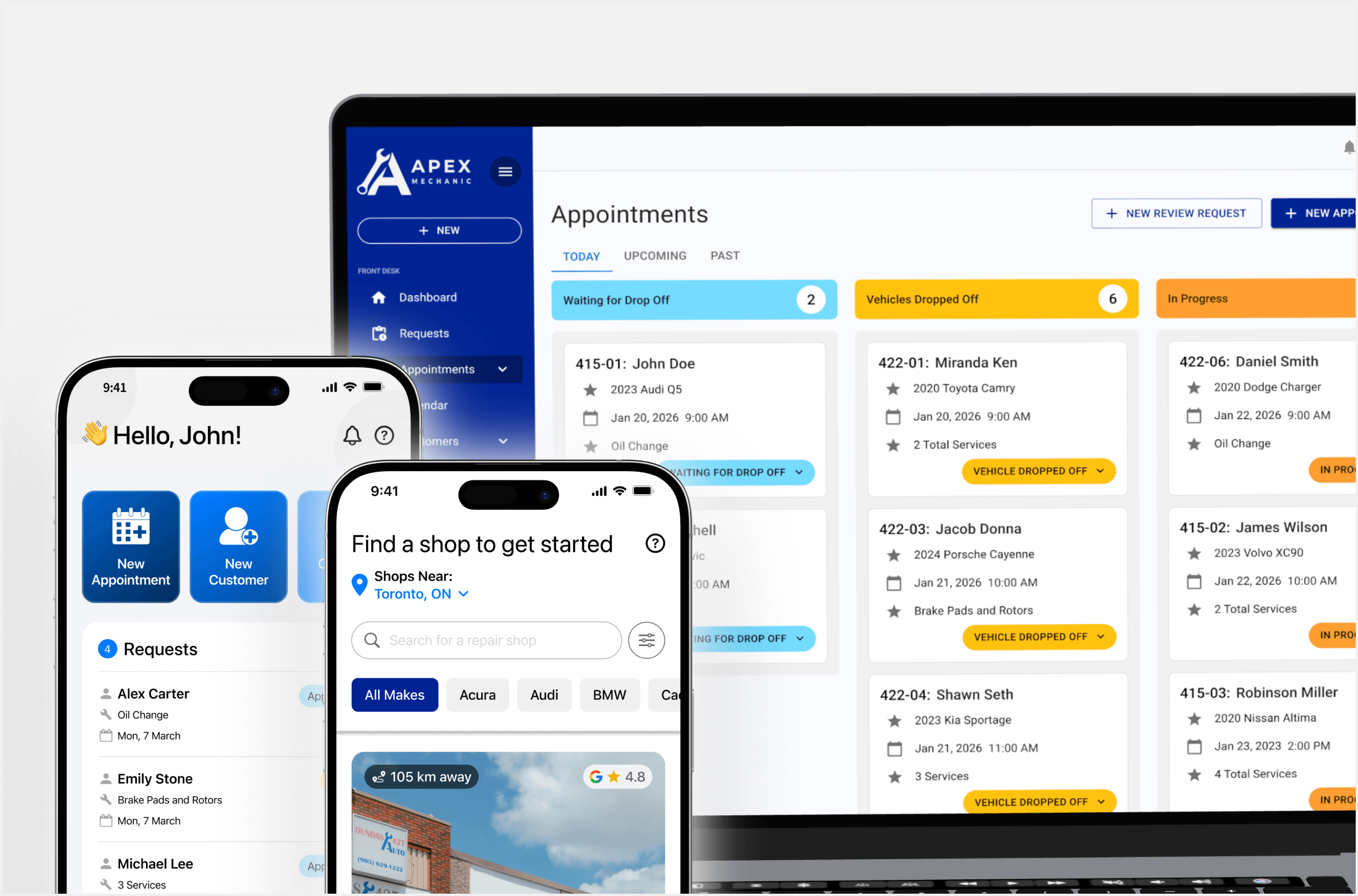
An appointment goes into Google Calendar. The customer’s concern arrives by text. Their vehicle details are written on a sticky note beside the front desk. When someone reschedules, your team has several places to check and update. What a connected system changes: Appointment records bring the customer, vehicle, requested services, and scheduled time together. Confirmations and reminders help keep customers informed without requiring a separate message every time.
5. Too Much Depends on the Owner’s Memory
You know which customer approved the work, where the old invoice is saved, and who still owes a balance. But when you step away, your team needs to call you for answers. That’s a sign that information needs a more consistent home. What a connected system changes: Shared records make everyday information easier for your team to find. You spend less time answering routine questions and more time managing the shop.
Month to month subscription. 30 day money back guarantee. No contracts.
Set it up under 15 minutes